
Quick menu:
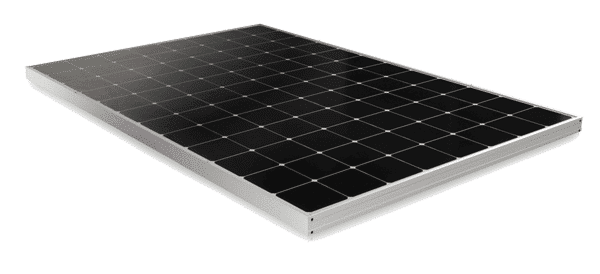
Solar panels in the land of the sun
“Logical right, solar panels on your home in Spain?“, it often sounds.
Upon investigation, however, it is striking that Spain is anything but a leader in green energy.
See for yourself the statistic below from Eurostat. In 2016, despite its favorable factors, Spain still scored below average within Europe.
“Logical right, solar panels on your home in Spain?“, it often sounds.
After research, it is striking that Spain is anything but a leader in green energy.
See for yourself the statistic below from Eurostat. In 2016, despite its favorable factors, Spain still scored below average within Europe.
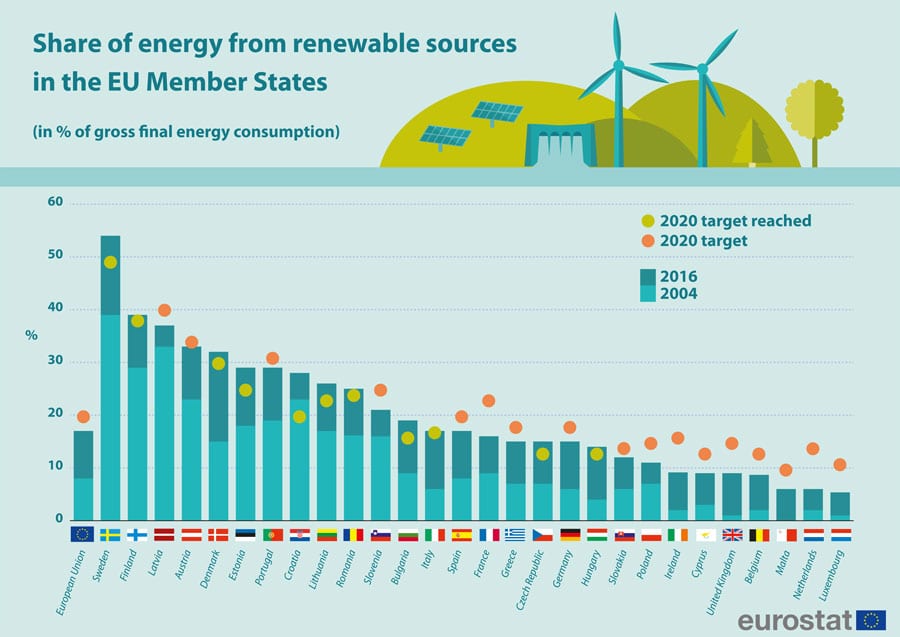
source: eurostat
This is undoubtedly due to the hefty tax on solar energy, the so-called “Impuesto del sol. This is eliminated in 2019. Currently, homeowners who have solar panels installed actually receive subsidies, under certain conditions.
Iberdrola is the main energy supplier there.
The rising demand for solar panels has been evident ever since. The market is growing rapidly.
Not only Spaniards, but also expats, residential and non-residential residents are increasingly resolutely opting for green energy.
Solar panels are therefore an obvious choice.
*Request free, no-obligation solar panel quotes and advice
from 3 installers who speak your language
Energy and rising rates
Spain, the land of sunshine is heaven on earth for many.
Do you live there? Do you have a vacation home there?
Don’t let a (sudden) high energy bill spoil your fun.
The cost of electricity in the whole of Europe, but also in Spain, is making the craziest jumps.
Energy suppliers dare to play around with their (variable) tariffs.
A lot of people are beginning to realize that they had better be self-sufficient in the future.
Certain regions in Spain have up to 320 days of sunshine a year.
Therefore, the decision to produce your own electricity constitutes a more than logical choice.
The sun can save you a lot of money.
*Request free, no-obligation solar panel quotes
from 3 installers who speak your language
How to start your search.
How do you begin this search for the solar installation that is right for you? After all, every household and home is different.
The first step is undoubtedly: getting a good idea of your current or expected consumption.
This is expressed in kWh/year. And is easily found on your energy supplier’s bill. Major influencers in electricity consumption are:
- cooling
- heating
- swimming pool (pump and heating)
- slumber consumption (freezer, refrigerator, hot water heater…)
We recommend you get guidance from a specialist. Your electricity bill can be a useful guide . It will add value to the analysis of your energy needs.
IMPORTANT: Always work with a certified installer. If not, there is a chance that you will not get your installation inspected.
We like to give you some inside information. That will give you a better understanding and peace of mind about the entire process.
We try to teach you a thing or two about how solar panels and solar installations work.
Therefore, be sure to read on!
How to start your search.
How do you begin this search for the solar installation that is right for you? After all, every household and home is different.
The first step is undoubtedly: getting a good idea of your current or expected consumption.
This is expressed in kWh/year. And is easily found on your energy supplier’s bill. Major influencers in electricity consumption are:
- cooling
- heating
- swimming pool (pump and heating)
- slumber consumption (freezer, refrigerator, hot water heater…)
We recommend you get guidance from a specialist. Your electricity bill can be a useful guide . It will add value to the analysis of your energy needs.
IMPORTANT: Always work with a certified installer. If not, there is a chance you will not get your installation inspected.
We like to give you some inside information. That will give you a better understanding and peace of mind about the entire process.
We try to teach you a thing or two about how solar panels and solar installations work.
Therefore, be sure to read on!
*Request free, no-obligation solar panel quotes and advice
from 3 installers who speak your language
Advantages of solar panels
Solar panels have an inexhaustible source of energy: the sun.
In addition to putting your best foot forward:
- the preservation of a green environment
- the reduction of CO2 emissions
… you will be able to take advantage of:
- cheap electric energy
- an increase in the value of your home or property
- renewable energy
- save money
Operation of solar panels
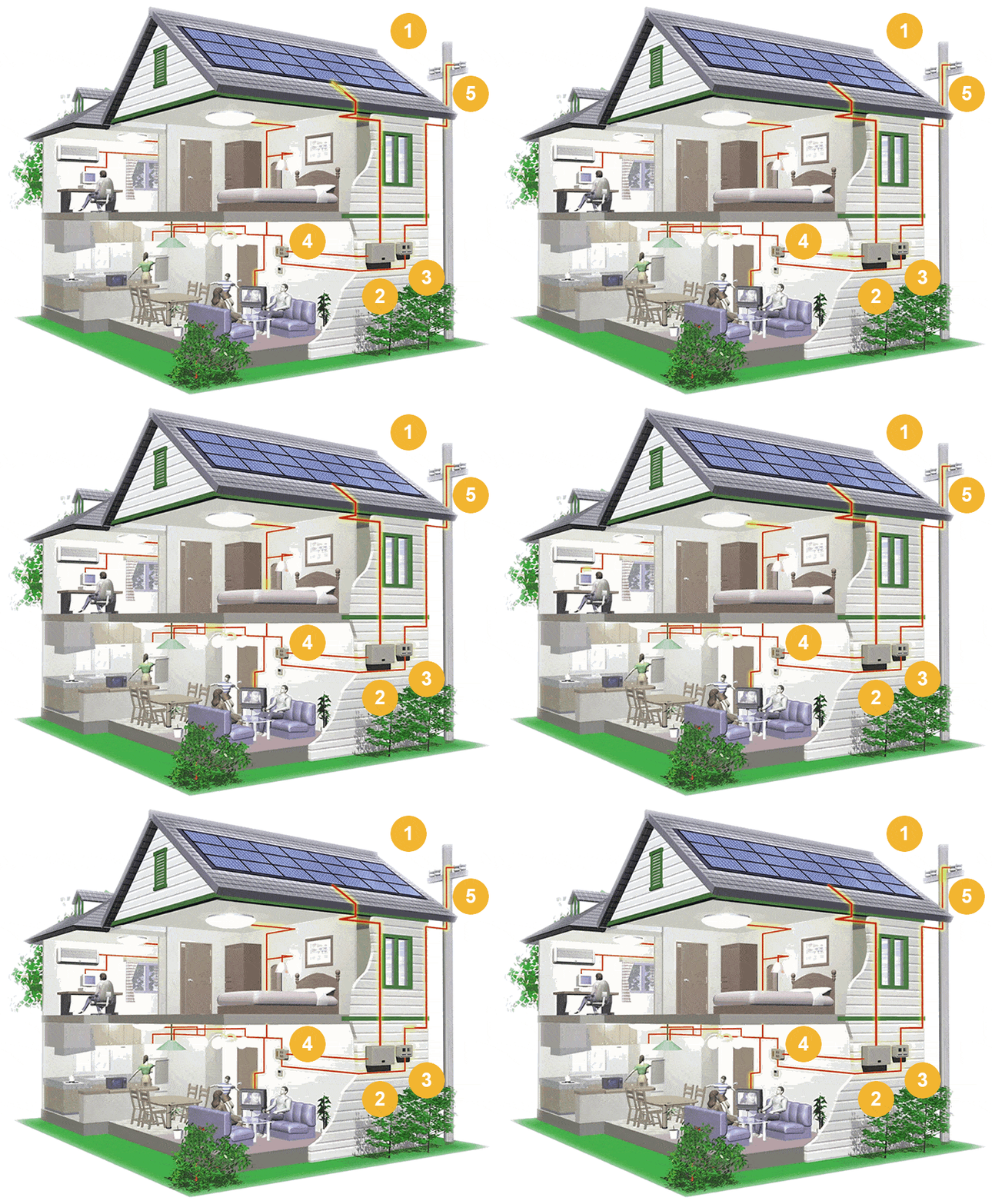
The operation of a solar installation:
- Solar panels generate direct current from sunlight
- Inverter converts direct current into alternating current to make it usable for household and other appliances
- Excess energy is injected into the grid
- Alternating current generated becomes available in the home
- A shortage of electricity is replenished from the grid
Advantages of solar panels
Solar panels have an inexhaustible source of energy: the sun.
In addition to putting your best foot forward:
- the preservation of a green environment
- the reduction of CO2 emissions
… you will be able to take advantage of:
- cheap electric energy
- an increase in the value of your home or property
- renewable energy
- save money
*Request free, no-obligation solar panel quotes and advice
from 3 installers who speak your language
What do solar panels cost?
Specialists usually assume your existing or expected consumption. This number is expressed in kWh and on an annual basis. This value is usually the basis for calculating the number of solar panels needed:
- A low-consumption 2-person family sometimes has enough with a production of 1,500 to 2,000 kWh per year.
- Whereas with larger families depending on the presence of large consumers, this can reach 8,000 kWh per year or even more. Heating the home or swimming pool electrically in particular appears to take a big bite out of the budget.
The average cost for solar panels, delivered and installed, ranges between €4,500 and €9,000.
A home battery setup can sometimes be obtained from certain installers for as little as €8,000.
Don’t just pin your hopes on this, however. There are a lot of variables in the price calculation:
- number of panels
- type of panels
- peak production
- structure for mounting (roof vs. ground setup)
- cabling
- type of inverters
- working hours
- relocation
- …
Note: VAT on these installations is always 21% in Spain.
Furthermore, the cost of a decent and quality installation is similar to the rest of Europe. Working hours may be cheaper in Spain. However, a solar installation consists mainly of material and technology and less of labor.
What homeowners with solar panels in Spain cite as the biggest benefit is the efficiency. For example, solar installations in Spain enjoy many solar hours combined with a high level of irradiance. Often quite a bit higher than in the rest of Europe. As a result, the efficiency of a module fluctuates between 130 and 170%. Specifically, this means that a 400Wp panel can in some cases achieve an output of 600Wp or more. Consequently, you will need fewer panels in Spain compared to elsewhere in Europe.
What do solar panels cost?
Specialists usually assume your existing or expected consumption. This number is expressed in kWh and on an annual basis. This value is usually the basis for calculating the number of solar panels needed:
- A low-consumption 2-person family sometimes has enough with a production of 1,500 to 2,000 kWh per year.
- Whereas with larger families depending on the presence of large consumers, this can reach 8,000 kWh per year or even more. Heating the home or swimming pool electrically in particular appears to take a big bite out of the budget.
The average cost for solar panels, delivered and installed, ranges between €5,500 and €9,000.
A home battery setup can sometimes be obtained from certain installers for as little as €8,000.
Don’t just pin your hopes on this, however. There are a lot of variables in price:
- number of panels
- type of panels
- peak production
- structure for mantage (roof vs. ground setup)
- cabling
- type of inverters
- working hours
- relocation
- …
Note: VAT on solar installations is always 21% in Spain.
Furthermore, the cost of a decent and quality installation is similar to the rest of Europe. Working hours may be cheaper in Spain. An installation with solar panels consists mainly of material and technology and less of labor.
What homeowners with solar panels in Spain cite as the biggest benefit is the efficiency. For example, solar installations in Spain enjoy many solar hours combined with a high level of irradiance. Often quite a bit higher than in the rest of Europe. As a result, the efficiency of a module fluctuates between 130 and 170%. Specifically, this means that a 400Wp panel can in some cases achieve an output of 600Wp or more.
Consequently, you will need fewer panels in Spain compared to elsewhere in Europe.
*Request free, no-obligation solar panel quotes and advice
from 3 installers who speak your language
Quality of solar panels
The quality of solar panels is divided into 3 types:
- TIER 1
- TIER 2
- TIER 3
This qualification is based on the quality of, among other things, the production process of the solar panel manufacturer (cfr iso standards). And takes into account the following factors:
- The number of years a producer has been active in the market
- The level of vertical integration (= one or several producers?).
- The level of production automation
- The investment in R&D (research and development)
The best panels have TIER 1. This means above all that such panels are very reliable and durable. Only 2% of all panels used worldwide are TIER 1. A higher TIER thus results in:
- durability of your panel
- higher efficiency
- longer warranty life on the solar panel
- long-term production guarantee
- high degree of finish
- better technology
- ethics in production
- confidence in producer
- being bankable or not (= having sufficient value according to the bank, so that they can be financed)
In short, investing in quality pays off in the long run.
Find an overview of the TIER1 top solar panels here: https://solaranalytica.com/tier-1-solar-panels/
Quality of solar panels?
The quality of solar panels is divided into 3 types:
- TIER 1
- TIER 2
- TIER 3
This qualification is based on the quality of, among other things, the production process of the solar panel manufacturer (cfr iso standards). And takes into account the following factors:
- The number of years a producer has been active in the market
- The level of vertical integration (= one or several producers?).
- The level of production automation
- The investment in R&D (research and development)
The best panels have TIER 1. This means above all that such panels are very reliable and durable. Only 2% of all panels used worldwide are TIER 1. A higher TIER thus results in:
- durability of your panel
- higher efficiency
- longer warranty life on the solar panel
- long-term production guarantee
- high degree of finish
- better technology
- ethics in production
- confidence in producer
- being bankable or not (= having sufficient value according to the bank so that they can be financed)
In short, investing in quality pays off in the long run.
Find an overview of the TIER1 top solar panels here: https://solaranalytica.com/tier-1-solar-panels/
Classification quality solar panels
TIER 1
- Active within the market for at least 5 years
- A lot of money is invested in research and development
- Business processes are fully automated
- Vertical integration
- 2% Of the market
TIER 2
- Active in the market for 2 to 5 years
- Not fully automated
- Less emphasis on research and development
- 8% of total market
TIER 3
- Active in the market for less than 2 years
- Processes are mainly carried out manually
- Production of solar panels is outsourced
- Little attention to research and development
- 90% of the market
*Request free, no-obligation solar panel quotes and advice
from 3 installers who speak your language

Efficiency of solar panels
Besides the fact that you can enjoy a lot more hours of sunshine on the Spanish continent and its islands, solar panels bring in a lot more.
Whereas in many European countries solar panels achieve efficiencies between 80 and 95%, in the most favorable situation in Spain can easily reach efficiencies of over 150%. Often a professional installer has the necessary apps to simulate the efficiency of a solar panel installation.
All this results in a quick payback for solar panels.
Specifically, this means you can enjoy free electricity for years.
Efficiency of solar panels
In addition to being able to enjoy a lot more hours of sunshine on the Spanish continent and its islands, solar panels bring in a lot more.
Whereas in many European countries solar panels achieve efficiencies between 80 and 95%, in the most favorable situation in Spain can easily reach efficiencies of over 150%. Often a professional installer has the necessary apps to simulate the efficiency of a solar panel installation.
All this results in a quick payback for solar panels.
Specifically, this means you can enjoy free electricity for years.
*Request free, no-obligation solar panel quotes and advice
from 3 installers who speak your language
Solar panels with or without home battery?
Following this, people often ask the following question,“Does the investment in a home battery make sense?“
To assess this, preferably base yourself on the factors below:
- Do you use a lot of energy mainly inthe evening or at night?
- Do you use air conditioning for cooling during hot summer nights?
- Do you have snooze consumption in absence?
- Desire a backup of energy during power outages?
- Do you wish to minimize injection to the grid?
If you answered“yes” to any of the above questions, then a home battery is worth considering.
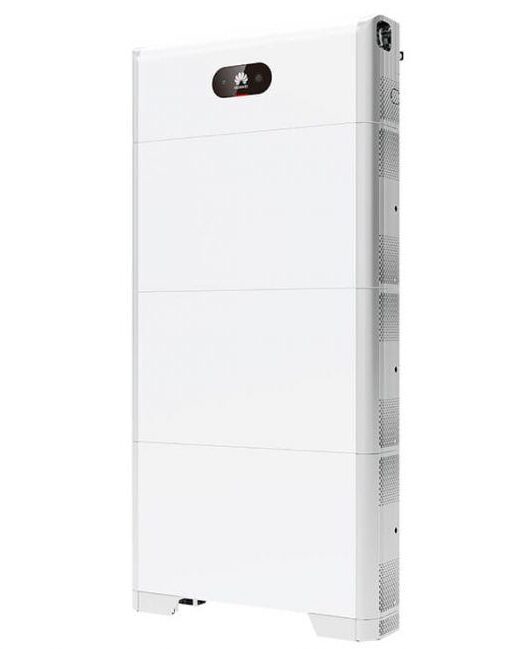
If you are limited in budget, ask your installer to work with a setup that is“battery-ready.” This is an installation where you can later connect a battery. Note that a hybrid inverter (=battery-ready) is more expensive than a“regular” inverter.
Unused energy you inject in Spain usually costs from €0.05/kWh. This is in agreement with your energy supplier. Electricity you usually buy between €0.20/kWh and €0.60/kWh. (update March 2022)
Solar panels with or without home battery?
Following this, people often ask the following question,“Does the investment in a home battery make sense?“
To assess this, preferably base yourself on the factors below:
- Do you use a lot of energy mainly inthe evening or at night?
- Do you use air conditioning for cooling during hot summer nights?
- Do you have snooze consumption in absence?
- Desire a backup of energy during power outages?
- Do you wish to minimize injection to the grid?
If you answered“yes” to any of the above questions, then a home battery can be considered.
If you are limited in budget, ask your installer to work with a setup that is“battery-ready.” This is an installation where you can later connect a battery. Note that a hybrid inverter (=battery-ready) is more expensive than a“regular” inverter.
Unused energy you inject in Spain usually costs from €0.05/kWh. This is in agreement with your energy supplier. Electricity you usually buy between €0.20/kWh and €0.60/kWh. (update March 2022)
*Request free, no-obligation solar panel quotes and advice
from 3 installers who speak your language
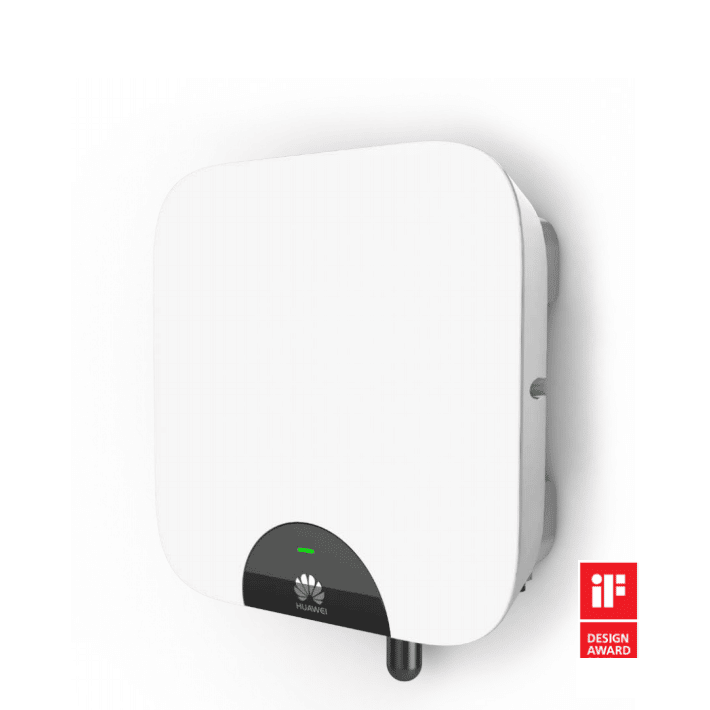
String inverter
This type of inverter is most commonly used in situations where all the solar panels – with no shade – are on one roof with the same angle of inclination and incidence of light.
In a situation with no shade sources with a straight-to-straight roof or a ground setup in a field, a string inverter represents the possible choice for good value for money.
The installer adjusts his string inverter to the production of the solar panels.
You can monitor the production of your panels as a whole
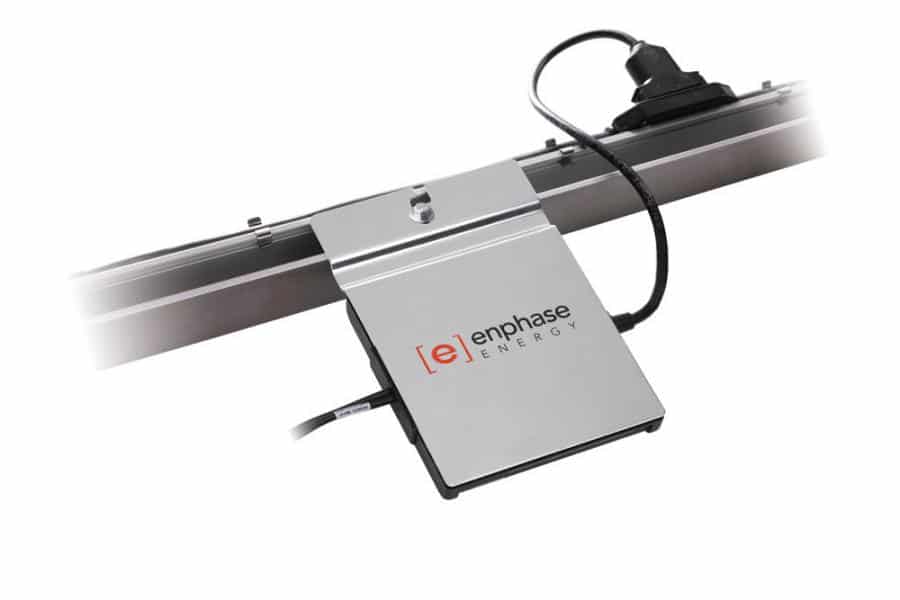
Micro inverter
Since in Spain many homeowners have many different small roofs and ditto laying surfaces, installers are more often opting for micro-inverters.
In a solar panel installation with micro inverters, each solar panel individually gets its own inverter. This inverter directly converts the direct current to alternating current.
An arrangement with microinverters is very flexible and expandable.
You will be able to closely monitor production for each individual panel.
string inverter
microinverter
Types of inverters
String inverter
This type of inverter is most commonly used in situations where all the solar panels – with no shade – are on one roof with the same angle of inclination and incidence of light.
In a situation with no shade sources with a straight-to-straight roof or a ground setup in a field, a string inverter represents the possible choice for good value for money.
The installer adjusts his string inverter to the production of the solar panels.
You can monitor the production of your panels as a whole
Micro inverter
Since in Spain many homeowners have many different small roofs and ditto laying surfaces, installers are more often opting for micro-inverters.
In a solar panel installation with micro inverters, each solar panel individually gets its own inverter. This inverter directly converts the direct current to alternating current.
A setup with micro-inverters is very flexible and expandable.
You will be able to closely monitor production for each individual panel.
*Request free, no-obligation solar panel quotes and advice
from 3 installers who speak your language
Licensing, inspection and grants
update February 2023
Permit
The installation of solar panels requires a“building permit” in Spain. Although much of Spain’s regions exempt you from this.
The application must be made to the municipality. The procedure and cost vary from municipality to municipality
Usually this procedure is quick and smooth. You will usually pay a fee to the municipality (tasa = municipal tax) for this. Or as a percentage on the offer price. Or a flat fee.
In exceptional cases, a preliminary inspection (=memoria tecnica) is required.
Rarely are applications for installation of solar panels denied.
Technical inspection of the installation and notification/injection
The certified installer is required by law to provide you with the inspection certificate for his installation after installation.
At the same time, he will register your solar installation with your energy supplier. The energy supplier usually has 6 to 8 weeks to process this notification. After that, your energy supplier will invite you (to one of its offices) to negotiate your injection rate with you.
Note: You must do this in person.
The injection rate (=rate for delivering back electricity) is at least €0.05 per kWh at Iberdrola and Endesa.
Grants/support measures
Subsidies and support measures for solar panels in Spain exist at different levels.
- European level
- Federal/Spanish level
- Province
- Municipality
The amount of subsidy
“What amount will I receive?” is undoubtedly the question the installer hears most often.
However, a gray cloud hangs around this issue. Many issues are unclear.
However, it is virtually impossible to give a direct answer to this without extensive research. The exact amount depends on:
- The municipality in which they are placed. For example, rural municipalities with fewer than 5,000 inhabitants enjoy greater support.
- Type of property
- A bonus in the IBI (property tax)
- Withholding in personal income tax (IRPF).
The amount of support varies in percentage and in the amount per kWp.
In addition, there are requirements attached:
- You must consume 80% of the energy produced yourself
- The ability to monitor electricity production
We wish you success in your search!
Licensing, inspection and grants
update February 2023
Permit
The installation of solar panels requires a“building permit” in Spain. Although much of Spain’s regions exempt you from this.
The application must be made to the municipality. The procedure and cost vary from municipality to municipality
Usually this procedure is quick and smooth. You will usually pay a fee to the municipality (tasa = municipal tax) for this. Or as a percentage on the offer price. Or a flat fee.
In exceptional cases, a preliminary inspection (=memoria tecnica) is required.
Rarely are applications for the installation of solar panels denied.
Technical inspection of installation and notification/injection
The certified installer is required by law to provide you with the inspection certificate for his installation after installation.
At the same time, he will register your solar installation with your energy supplier. The energy supplier usually has 6 to 8 weeks to process this notification. After that, your energy supplier will invite you (to one of its offices) to negotiate your injection rate with you.
Note: You must do this in person.
The injection rate (=rate for delivering back electricity) is at least €0.05 per kWh at Iberdrola and Endesa.
Grants/support measures
Subsidies and support measures for solar panels in Spain exist at different levels.
- European level
- Federal/Spanish level
- Province
- Municipality
The amount of subsidy
“What amount will I receive?” is undoubtedly the question the installer hears most often.
However, a gray cloud hangs around this issue. Many issues are unclear.
However, it is virtually impossible to give a direct answer to this without extensive research. The exact amount depends on:
- The municipality in which they are placed. For example, rural municipalities with fewer than 5,000 inhabitants enjoy greater support.
- Type of property
- A bonus in the IBI (property tax)
- Withholding in personal income tax (IRPF).
The amount of support varies in percentage and in the amount per kWp.
In addition, there are requirements attached:
- You must consume 80% of the energy produced yourself
- The ability to monitor electricity production
We wish you success in your search!
*Request free, no-obligation solar panel quotes and advice
from 3 installers who speak your language

Compare free quotes from installers in Spain
Independent advice
More than 10 years of experience
Get quotes and advice
Find the specialist in your area in Spain.
Compare quotes and save up to sometimes 40%!
Compare 3 solar panel suppliers in your area who speak your language.
Get quotes and advice
Find the specialist in your area in Spain.
Compare quotes and save up to sometimes 40%!
Compare 3 solar panel suppliers in your area who speak your language.
The regions and cities in and around which you can request solar panel quotes:
The regions and cities in and around which you can request solar panel quotes:
Regions:
- Andalusia
- Aragon
- Asturias
- Basque Country
- Canary Islands
- Cantabria
- Castilla y León
- Castilla-La Mancha
- Catalonia
- El Hierro
- Extremadura
- Formentera
- Fuerteventura
- Galicia
- Galicia
- Gran Canaria
- Ibiza
- Islas Baleares
- La Gomera
- La Palma
- La Rioja
- Lanzarote
- Mallorca
- Menorca
- Murcia
- Navarre
- Madrid Region
- Region of Murcia
- Valencia Region
- Tenerife
Cities:
- Albacete
- Alcalá de Henares
- Alcobendas
- Alcorcón
- Alcoy
- Algeciras
- Alicante
- Almería
- Antequera
- Ávila
- Badajoz
- Badalona
- Baracaldo
- Barcelona
- Benalmádena
- Benidorm
- Bilbao
- Blanes
- Burgos
- Cáceres
- Cadiz
- Cartagena
- Castellón de la Plana
- Córdoba
- Cuenca
- Dénia
- Dos Hermanas
- Elche
- Elx
- Estepona
- Fuenlabrada
- Getafe
- Gijón
- Girona
- Granada
- Hospital de Llobregat
- Huelva
- Huesca
- Ibiza town
- Jaén
- Jerez de la Frontera
- La Coruña
- Las Palmas de Gran Canaria
- Leganés
- León
- Lleida (Lerida)
- Lloret de Mar
- Logroño
- Madrid
- Málaga
- Marbella
- Mataró
- Móstoles
- Murcia
- Ourense
- Oviedo
- Palma de Mallorca
- Pamplona
- Parla
- Giant
- Ronda
- Sabadell
- Salamanca
- San Cristóbal de La Laguna
- San Sebastián
- Santa Coloma de Gramanet
- Santa Cruz de Tenerife
- Santander
- Santiago de Compostela
- Segovia
- Seville
- Tarifa
- Tarragona
- Counted
- Terrasa
- Teruel
- Toledo
- Torrejón de Ardoz
- Torremolinos
- Torrevieja
- Úbeda
- Valencia
- Valladolid
- Vigo
- Vitoria-Gasteiz
- Zamora
- Zaragoza
The costas and resorts in and around which you can request quotes for solar panels:
The costas and resorts in and around which you can request quotes for solar panels:
Costa’s:
- Costa Brava
- Costa del Maresme
- Costa del Garraf
- Costa Daurada
- Costa del Azahar – Costa dels Tarongers
- Costa Blanca
- Costa Calida
- Costa de Almería
- Costa Tropical
- Costa del Sol
- Strait of Gibraltar
- Costa de la Luz
- Rías Baixas
- Costa da Morte
- Gulf of Artabro
- Rías Altas
- Costa Verde
- Cornisa Cantábrica
- Costa Vasca
Seaside resorts:
- Almería
- Almuñécar (Granada)
- Alicante
- Benidorm
- Blanes
- Calonge
- Calpe
- Cambrils
- Castell-Platja d’Aro
- Castelldefels
- Dénia
- Fenals
- Fuengirola
- Formentera
- Gavà
- Lloret de Mar
- L’Escala
- Malgrat de Mar
- Marbella
- Mojacar
- Motril
- Mallorca
- Nerja
- Palamós
- Pineda de Mar
- Rincón de la Victoria
- Roses
- Salou
- San Sebastian
- Sant Feliu de Guíxols
- Sitges
- Tarragona
- Torremolinos
- Torrevieja
- Tossa de Mar
- Vera
- Villanova


